
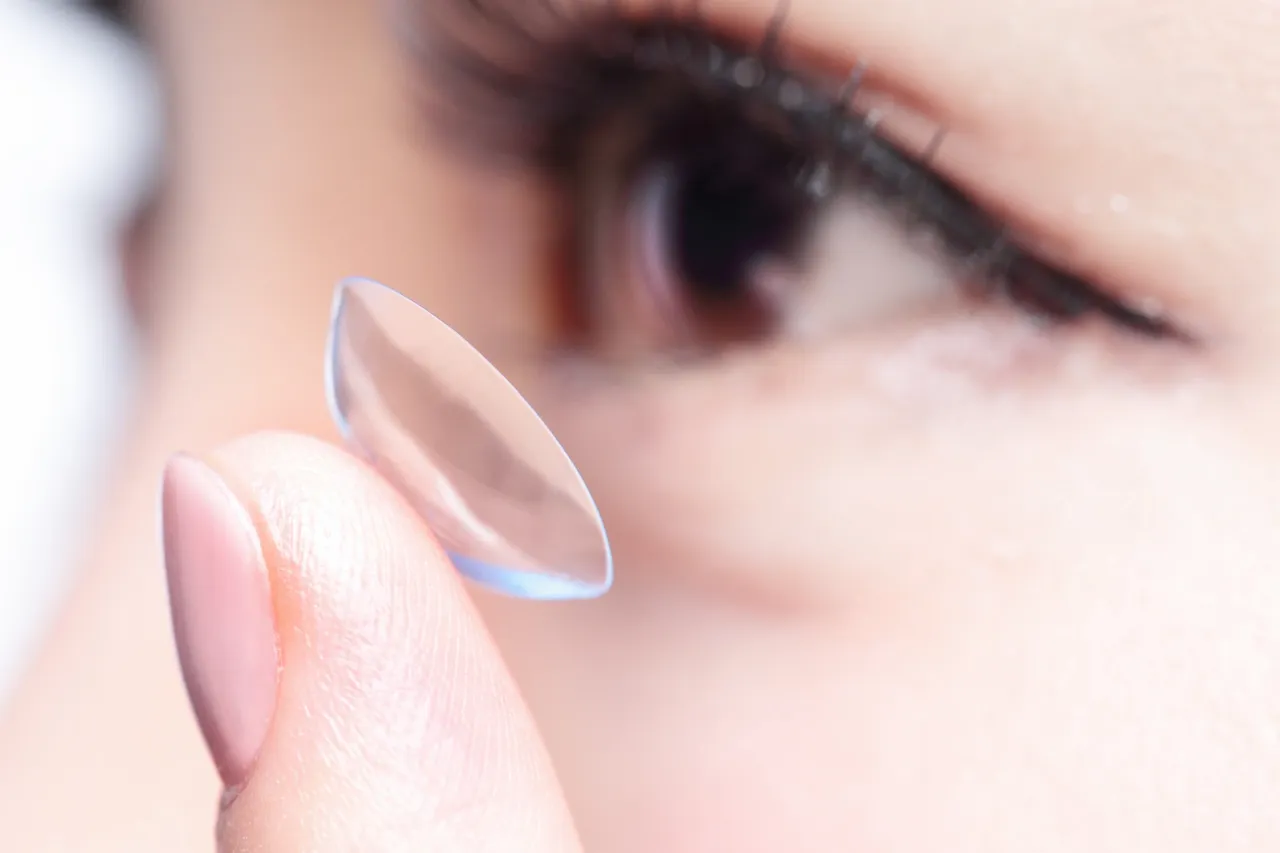
Contact lenses are thin, curved lenses placed directly on the surface of the eye to correct vision, and they function similarly to eyeglasses. Corrective lenses work by refracting and focusing light so that objects appear clearer. Made from various soft or rigid gas-permeable materials, contact lenses can address several common refractive errors. Here’s information on contacts and how they are accessible for those with conditions like astigmatism and presbyopia:
What Is Astigmatism?
Astigmatism is a common refractive error characterized by an irregularly shaped cornea or lens inside the eye. Instead of being perfectly round like a basketball, the eye’s surface is shaped more like a football. This imperfection affects how light enters and focuses on the retina, the light-sensitive tissue at the back of the eye. The exact cause is not always known, but genetics plays a significant role for many.
Astigmatism is typically present from birth and can occur alongside other refractive errors, but it can also develop in adults. It may develop after an eye injury, disease, or certain types of eye surgery that alter the cornea’s shape. The irregular curvature of the cornea or lens causes light to focus on different points on the retina instead of one. This dual focus can result in blurry or distorted vision at all distances. Individuals with astigmatism may also experience eye strain, headaches, and difficulty seeing clearly at night.
Vision correction for astigmatism requires a lens that compensates for the eye’s unique shape, and specialized contact lenses are designed for this purpose. Modern contacts offer options like toric lenses, which can align with the irregular shape of someone’s cornea or lens. Toric lenses correct the specific refractive errors caused by astigmatism. For those with more severe forms of astigmatism, rigid gas permeable (RGP) or hybrid lenses may be recommended, as they provide sharper vision by maintaining their shape over the corneal surface.
What Is Presbyopia?
Presbyopia is an age-related vision condition that makes it progressively harder to focus on close objects; it is not a disease. The natural lens inside the eye becomes harder and less flexible as a person ages. This change is a part of the aging process and typically becomes noticeable in one’s early to mid-40s, continuing to progress over time.
Why Does Presbyopia Occur?
Presbyopia causes a loss of elasticity, making it more difficult for the eye’s lens to change shape and focus on nearby objects. The muscles surrounding the lens also lose some of their strength, reducing its focusing power, so reading a menu or a text message can become challenging. The primary effect of presbyopia is blurred near vision. Individuals may find themselves holding books, newspapers, or smartphones at arm’s length to see them more clearly. Some other common experiences include:
- Eye Strain
- Headaches
- Needing Brighter Lighting
What Are Multifocal Lenses?
Multifocal lenses provide clear vision at multiple distances within a single lens. For contact lens wearers, this means having different zones for near, intermediate, and far vision built within the lens. These lenses allow the eye to smoothly shift focus between objects at different distances, as they can incorporate two or more prescriptions within a single lens. Multifocal lenses may especially benefit individuals managing nearsightedness and age-related farsightedness together.
Where Are Modern Contact Lenses Available?
Advances in optical technology have expanded the types of contact lenses available, and toric and multifocal lenses are available to align with your needs and unique corneal shape. Today, specialized lenses are available for individuals with astigmatism, presbyopia, or both conditions. Modern contact lenses are widely accessible, making it easier than ever to find lenses tailored to your needs. They can be purchased at optical stores, where specialists can provide professional fittings and guidance. Many ophthalmologists and optometrists also stock a broad range of lenses for purchase after a prescription has been finalized.
Learn More About Contacts Today
With advances in technology and materials, modern contacts offer improved comfort, breathability, and customization, making them a highly effective solution for many. Understanding the specific nature of your vision is the first step toward finding the right corrective solution. To learn about your vision, schedule an appointment with a specialist, as they can determine what you need.